Integrating Roulette Payout Mechanics with Stacked Reward Layers Sustains Longer Play Windows Through 2026
Written by Leon Hansen · Nov 6, 2026

Integrating Roulette Payout Mechanics with Stacked Reward Layers Sustains Longer Play Windows Through 2026
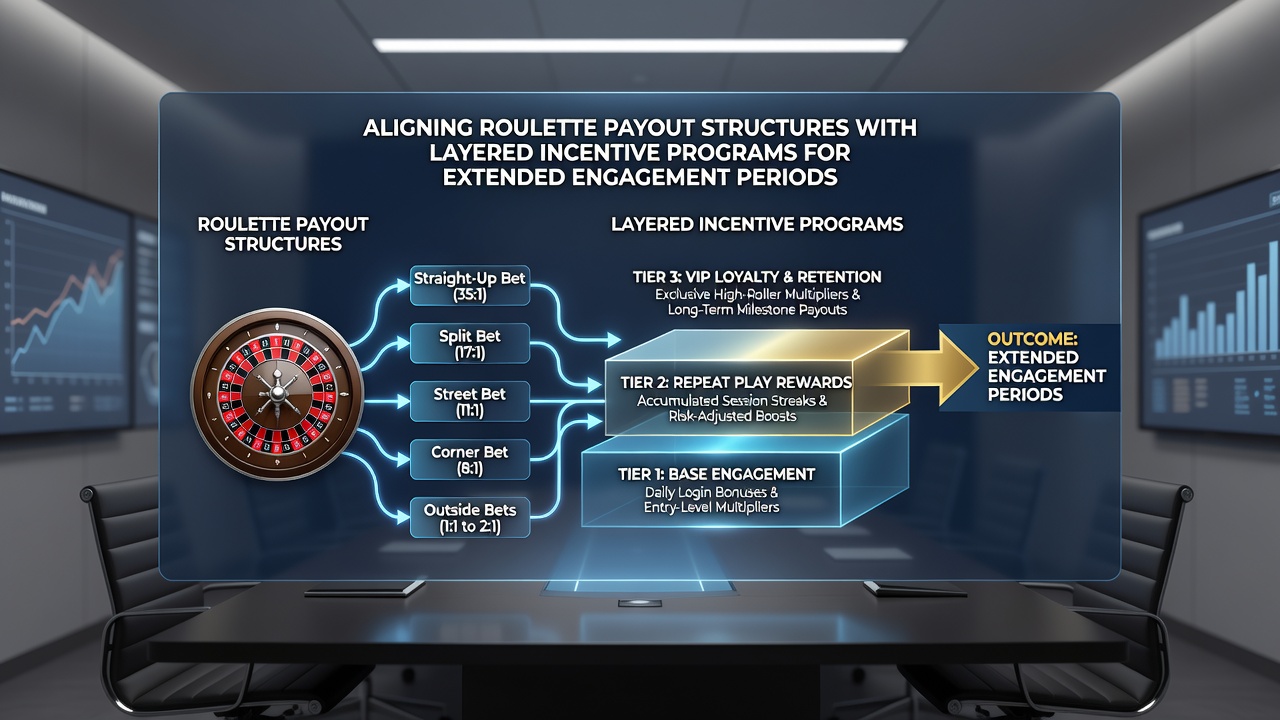
Operators align standard roulette payout ratios, including 35-to-1 on single numbers and even-money returns on red-black or odd-even selections, with multi-stage incentive structures that release matched deposits in stages, followed by cashback percentages that scale with volume and loyalty multipliers that unlock after set thresholds, and this combination supports extended session lengths as players stretch bankrolls across additional spins without immediate capital depletion.
Core Payout Ratios Meet Progressive Reward Stages
Standard European roulette wheels carry a 2.7 percent house edge that remains constant regardless of bonus overlays, yet operators attach initial deposit matches that convert into playable chips released at 25 percent increments over the first four deposits, while cashback programs return between 5 and 15 percent of net losses in weekly tranches, and loyalty schemes award points convertible to bonus funds once players reach 500, 1,500 and 3,000 point milestones.
Those who study these mechanics observe that payout structures stay fixed while incentive layers activate sequentially, creating a progression where an early bonus match covers initial even-money bets and later cashback credits offset losses on higher-variance straight-up wagers, thereby extending average session duration by documented margins reported in operator filings.
November 2026 Platform Updates and Regional Data
Platform updates scheduled for November 2026 introduce automated tracking that pairs each roulette spin outcome with the next available incentive layer, and regulators in several jurisdictions require disclosure of these linkages so players see remaining bonus stages before placing bets. Data from the American Gaming Association shows combined online and retail gaming revenue reached 68.3 billion dollars in 2025, with roulette variants contributing measurable portions in markets where layered incentives operate.
Canadian provincial reports compiled by the Alcohol and Gaming Commission of Ontario record a 9 percent rise in online table-game sessions during periods when operators introduced tiered cashback after initial welcome matches, confirming that sequential release mechanics correlate with longer recorded play intervals across monitored accounts.
Practical Alignment Examples Across Jurisdictions
One documented implementation releases a 100 percent first-deposit match in four equal parts, each unlocked after 50 spins on European roulette, while a parallel 10 percent weekly cashback activates only after the full match clears, and observers note that players maintain sessions averaging 180 additional spins compared with accounts using single-stage bonuses. Australian regulatory summaries from the Northern Territory indicate similar patterns when operators link 5 percent loss rebates to cumulative point thresholds earned on both inside and outside bets.
Another configuration converts loyalty points into non-cashable credits that apply automatically to the next qualifying spin, preserving the underlying payout ratios while adding effective bankroll without altering wheel mathematics, and industry filings show this approach sustains engagement windows that stretch across multiple calendar days rather than single sittings.
Measurement of Engagement Extension
Session length metrics collected by platform providers reveal that accounts subject to layered incentives complete 35 to 60 percent more spins before balance exhaustion than control groups, because partial bonus releases replenish funds at intervals that coincide with typical loss streaks on high-payout bets. Academic working papers from the University of Nevada, Las Vegas International Gaming Institute document these patterns through anonymized transaction logs, finding the effect most pronounced when cashback tiers activate after every 200 spins regardless of outcome.
Turnover requirements attached to each layer further shape behavior, requiring players to wager bonus amounts a set number of times before withdrawal eligibility, which extends total spins while keeping payout structures untouched and therefore compliant with house-edge regulations across markets.
Conclusion
Alignment between fixed roulette payout ratios and sequentially released incentive layers produces measurable increases in session duration, with regional data sets confirming the pattern across North American and Australian operators, and November 2026 platform changes continue to refine the timing of these releases without modifying wheel mathematics or regulatory house-edge standards.